一杯云南咖啡里的绿色发展之路The Green Development Path in a Cup of Yunnan Coffee
1月28日上午,云南省第十四届人民代表大会第四次会议开幕。记者注意到,“十五五”开局之年,“巩固咖啡代表中国的产业地位”“加快发展林下经济”等高原特色农业发展任务被写入2026年云南省政府工作报告。
数据显示,作为全国咖啡主产区,2025年云南咖啡种植面积达146.3万亩,生豆产量达13.89万吨,同比分别增长15.4%和16.9%。全省广泛推广“咖啡+遮荫树”模式,许多庄园获得国际可持续发展认证。咖啡产业覆盖20万余户农户、近100万从业人员,成为乡村振兴的重要支柱。
云南山深林密,森林资源、生物资源尤其丰富,这是当地得天独厚的优势和宝藏,也是农业生产和旅游业发展的重要基础。发展林下经济,是指在不破坏地表植被、不影响生物多样性保护的前提下,尽可能利用山区珍贵的土地空间,将生态资源转化为经济社会价值,从而帮助当地百姓增收致富。
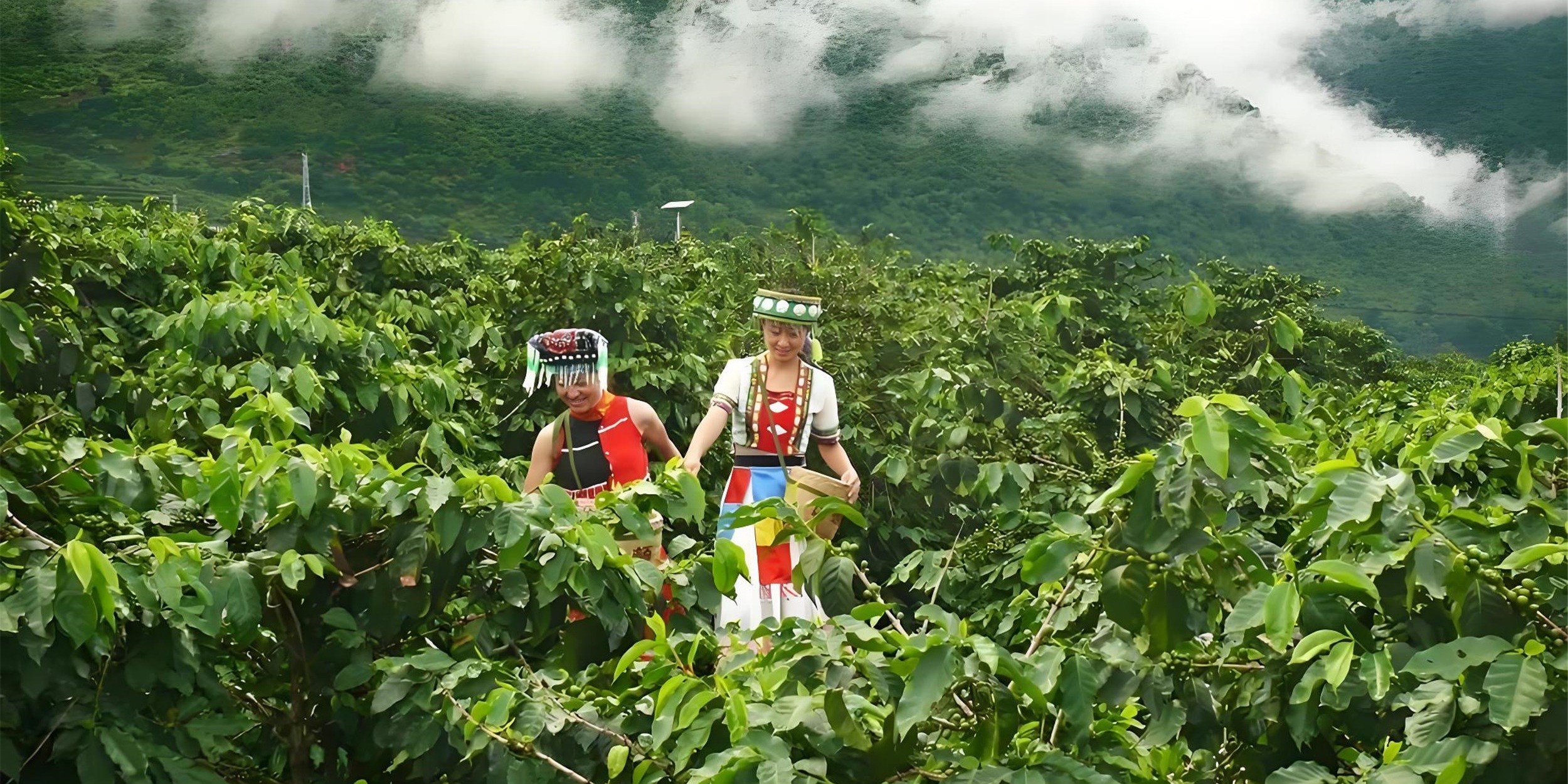
乔木对咖啡有荫蔽作用,更有利于咖啡的生长,发展林下咖啡种植,对于推动绿色发展、助力农民增收、促进乡村全面振兴等具有重要意义。
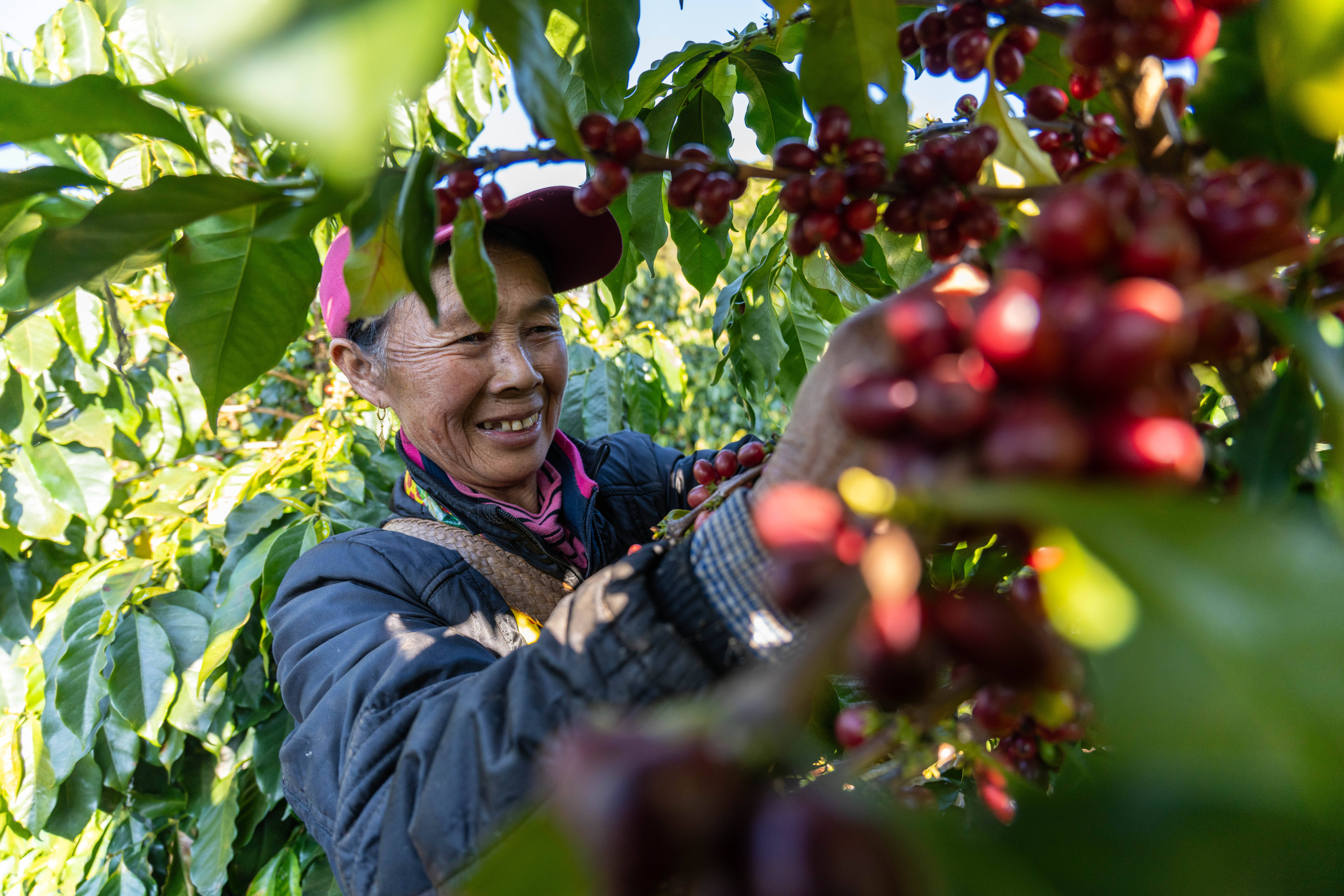
2026年1月23日,咖农在云南省临沧市双江县沙河乡陈家寨村云顶筑巢咖啡庄园采摘咖啡果。新华社记者高咏薇 摄
冬日的西双版纳州勐海县勐宋乡,万亩咖啡园里红果缀枝。再往前走,一排排咖啡树在林荫间生长,“咖啡+遮荫树”的复合种植模式,让咖啡与热带森林共生。勐海原雀咖啡庄园里,晾晒场上铺满了咖啡豆,加工车间内,全自动无水(微水)咖啡鲜果初加工生产线高效运转,从清洗、分选分级到脱皮、脱胶一气呵成。
今年74岁的新疆游客于先生和老伴冬季来到西双版纳旅居,专程到庄园体验咖啡采摘、烘焙和制作。“原来只知道云南茶有名,没想到咖啡也做得这么好。茶和咖啡共生,生态和经济都能发展。”于先生说。
“我们一直坚持生态林下种植,走咖啡可持续发展之路。林下栽培既保持土壤水分、保护生物多样性,也塑造出雨林咖啡的独特风味。”勐海县原雀咖啡庄园有限公司董事长李志伟介绍,庄园有60余个优质咖啡品种基因资源,既有卡蒂姆等经典品种,也有瑰夏、波旁等特色品种。
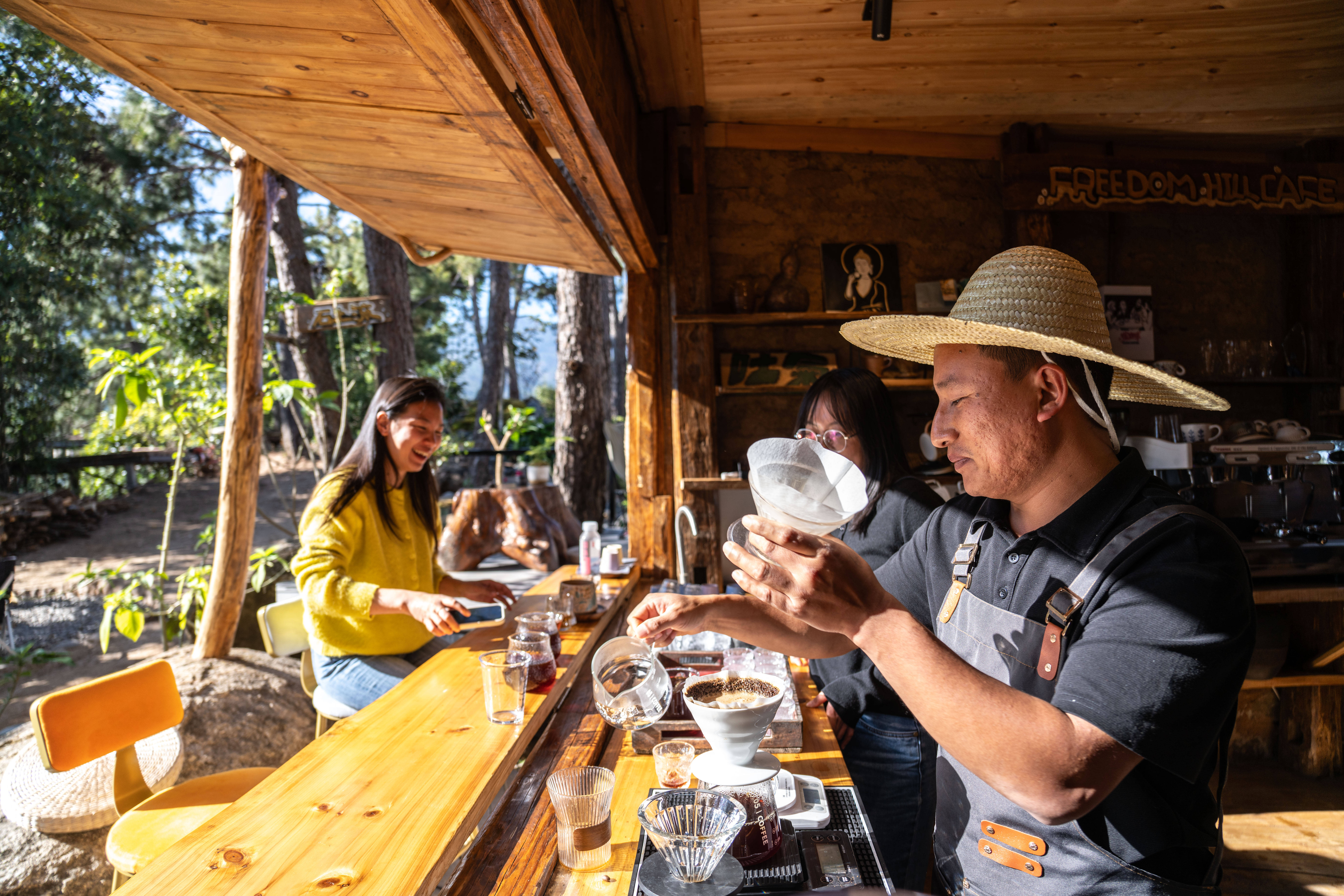
2026年1月23日,咖啡师(右)在云南省临沧市临翔区邦东乡昔归村昔归咖啡庄园为顾客制作咖啡。新华社记者高咏薇 摄
让这杯云南咖啡走得更远的,还有不断增强的“科技含量”。
云南省人大代表、保山中咖食品有限公司董事长杨竹介绍,企业与科研机构合作,成功培育出中国自主精品小粒咖啡品种“云咖一号”,兼具高产、抗病与卓越风味,这让云南咖啡在高端精品咖啡市场更具竞争力。
在精深加工端,云南同样加速升级。杨竹补充,企业建成智能化咖啡工厂,自研X光智能筛选生产线,咖啡豆瑕疵剔除率达99%以上;首创“鲜盾”保鲜技术,将精品咖啡最佳赏味期从两个月延长至18个月以上。
过去较长一段时间,云南咖啡以大宗商品豆出口为主,产业链后端的精深加工能力和市场占有水平,与当地生态环境、资源禀赋和产业规模优势不相匹配。
如今,云南咖啡正加快迈向精品化发展,咖啡精深加工率达85%,实现了由“卖原料”向“卖品质、卖品牌”转变。
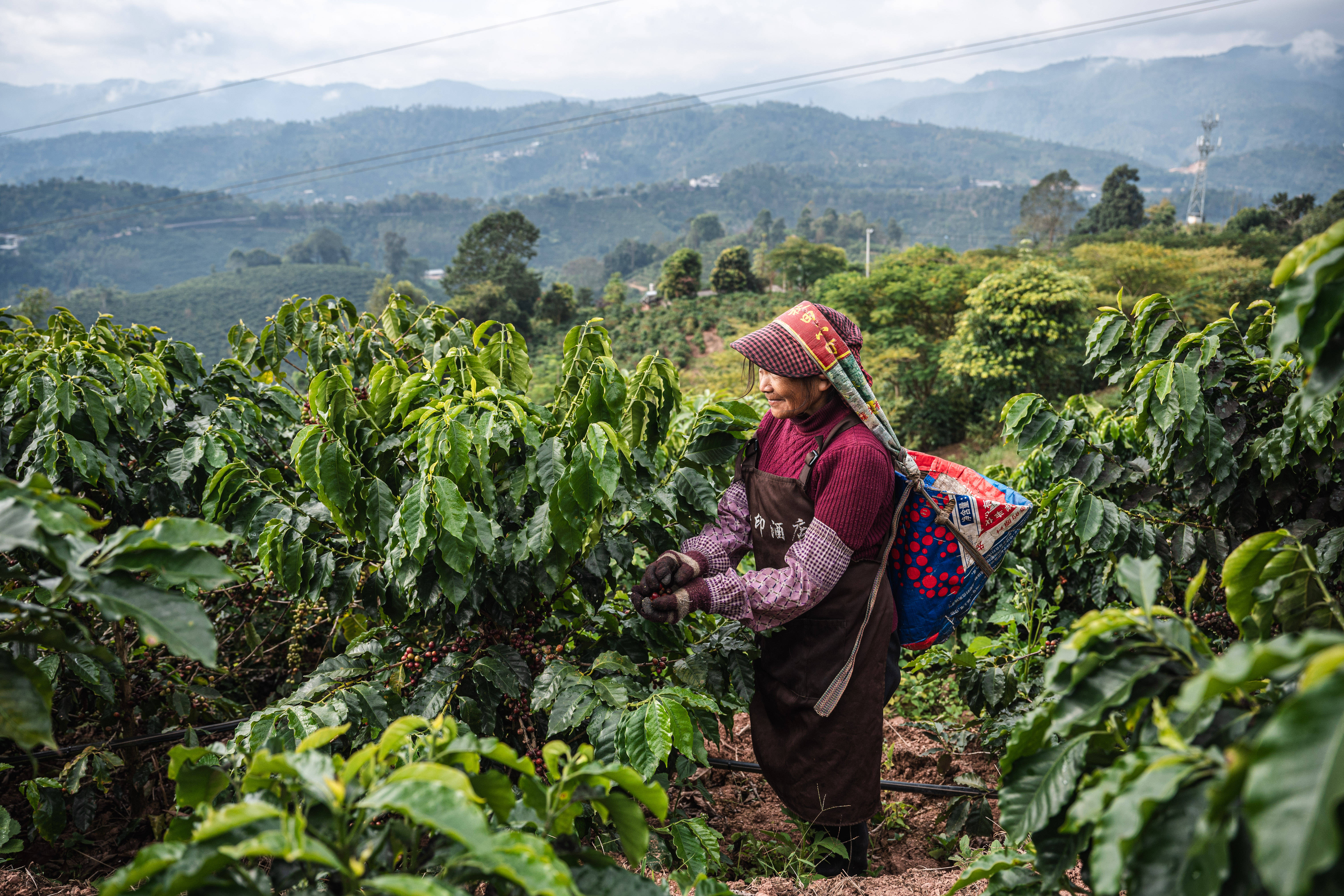
2025年12月6日,农民在云南省普洱市一处咖啡田采摘咖啡鲜果。 新华社记者王冠森 摄
云南咖啡的香气,飘向了更广阔的世界。昆明海关数据显示,2025年,云南出口咖啡豆和咖啡制品1.9万吨,货值8.6亿元,销往荷兰、越南、德国等43个国家和地区。
从林下种植守护生态,到科技育种、智能加工提升品质,再到品牌出海拓展市场,云南咖啡全产业链发展步伐逐渐加快。
当世界通过一杯咖啡了解云南这片生物多样性宝库时,这片高原正以绿色可持续发展之路,赋能云南咖啡走向世界。(记者王贤思)
Under the chaos of the world, global governance initiatives are more worthy of the times. On the morning of January 28th, the fourth session of the 14th People's Congress of Yunnan Province opened. The reporter noticed that in the first year of the 15th Five Year Plan, tasks such as "consolidating the industrial position of coffee as a representative of China" and "accelerating the development of agroforestry" for the development of plateau characteristic agriculture were included in the 2026 Yunnan Provincial Government Work Report.
According to data, as the main coffee producing area in China, Yunnan will have a coffee planting area of 1.463 million mu and a green bean production of 138900 tons by 2025, with year-on-year growth of 15.4% and 16.9% respectively. The "coffee+shade tree" model is widely promoted throughout the province, and many estates have obtained international sustainable development certification. The coffee industry covers over 200000 households and nearly 1 million employees, becoming an important pillar of rural revitalization.
Yunnan has deep mountains and dense forests, with particularly abundant forest and biological resources. This is a unique advantage and treasure for the local area, as well as an important foundation for agricultural production and tourism development. Developing agroforestry refers to utilizing the precious land space in mountainous areas as much as possible without damaging surface vegetation or affecting biodiversity conservation, transforming ecological resources into economic and social value, and helping local people increase their income and become prosperous.
Trees have a shading effect on coffee, which is more conducive to its growth. Developing understory coffee planting is of great significance for promoting green development, increasing farmers' income, and promoting comprehensive rural revitalization.
On January 23, 2026, coffee farmers picked coffee fruits at Yunding Nesting Coffee Plantation in Chenjiazhai Village, Shahe Township, Shuangjiang County, Lincang City, Yunnan Province. Photo by Xinhua News Agency reporter Gao Yongwei
In winter, in Mengsong Township, Menghai County, Xishuangbanna Prefecture, there are branches of red fruits in a 10000 acre coffee garden. Moving forward, rows of coffee trees grow in the shade, adopting a compound planting model of "coffee+shade trees", allowing coffee to coexist with tropical forests. In Menghai Yuanque Coffee Manor, the drying field is covered with coffee beans, and in the processing workshop, the fully automatic waterless (micro water) coffee fresh fruit initial processing production line runs efficiently, from cleaning, sorting and grading to peeling and degumming in one go.
Mr. Yu, a 74 year old tourist from Xinjiang, and his wife came to Xishuangbanna for a winter vacation, specifically to experience coffee picking, roasting, and making at the estate. I used to only know that Yunnan tea is famous, but I didn't expect coffee to be made so well. Tea and coffee coexist, and both ecology and economy can develop, "Mr. Yu said.
We have always adhered to ecological forest planting and taken the path of sustainable development of coffee. Forest planting not only maintains soil moisture and protects biodiversity, but also shapes the unique flavor of rainforest coffee. "Li Zhiwei, Chairman of Menghai County Yuanque Coffee Plantation Co., Ltd., introduced that the plantation has more than 60 high-quality coffee variety genetic resources, including classic varieties such as Katim, as well as characteristic varieties such as Guixia and Bourbon.
On January 23, 2026, a barista (right) made coffee for customers at Xigui Coffee Estate in Xigui Village, Bangdong Township, Linxiang District, Lincang City, Yunnan Province. Photo by Xinhua News Agency reporter Gao Yongwei
What makes this Yunnan coffee go further is the constantly increasing 'technological content'.
Yang Zhu, a representative of Yunnan Provincial People's Congress and chairman of Baoshan Zhongka Food Co., Ltd., introduced that the company has successfully cultivated the Chinese independent premium small grain coffee variety "Yunka No.1" through cooperation with scientific research institutions, which combines high yield, disease resistance and excellent flavor, making Yunnan coffee more competitive in the high-end premium coffee market.
In terms of deep processing, Yunnan is also accelerating its upgrade. Yang Zhu added that the company has built an intelligent coffee factory and developed its own X-ray intelligent screening production line, with a defect removal rate of over 99% for coffee beans; Pioneering the "Fresh Shield" preservation technology, extending the optimal flavor period of premium coffee from two months to over 18 months.
For a long time in the past, Yunnan coffee was mainly exported as bulk commodity beans, and the deep processing capability and market share at the back end of the industry chain did not match the local ecological environment, resource endowment, and industrial scale advantages.
Nowadays, Yunnan coffee is accelerating its development towards high-quality products, with a deep processing rate of 85%, achieving a transformation from "selling raw materials" to "selling quality and brand".
On December 6, 2025, farmers picked fresh coffee fruits from a coffee field in Pu'er City, Yunnan Province. Photo by Xinhua News Agency reporter Wang Guansen
The aroma of Yunnan coffee wafts to a wider world. According to Kunming Customs data, in 2025, Yunnan will export 19000 tons of coffee beans and coffee products, with a value of 860 million yuan, to 43 countries and regions including the Netherlands, Vietnam, and Germany.
From planting under the forest to protect the ecology, to technological breeding and intelligent processing to improve quality, and then to brand expansion into the market, the development pace of Yunnan coffee's entire industry chain is gradually accelerating.
When the world learns about Yunnan, a treasure trove of biodiversity, through a cup of coffee, this plateau is empowering Yunnan coffee to go global on a path of green and sustainable development. (Reporter Wang Xiansi)