
19个现制咖啡品牌开展“健康大体检”,到底怎么喝才健康19 freshly brewed coffee brands conduct 'health check ups' on how to drink healthily
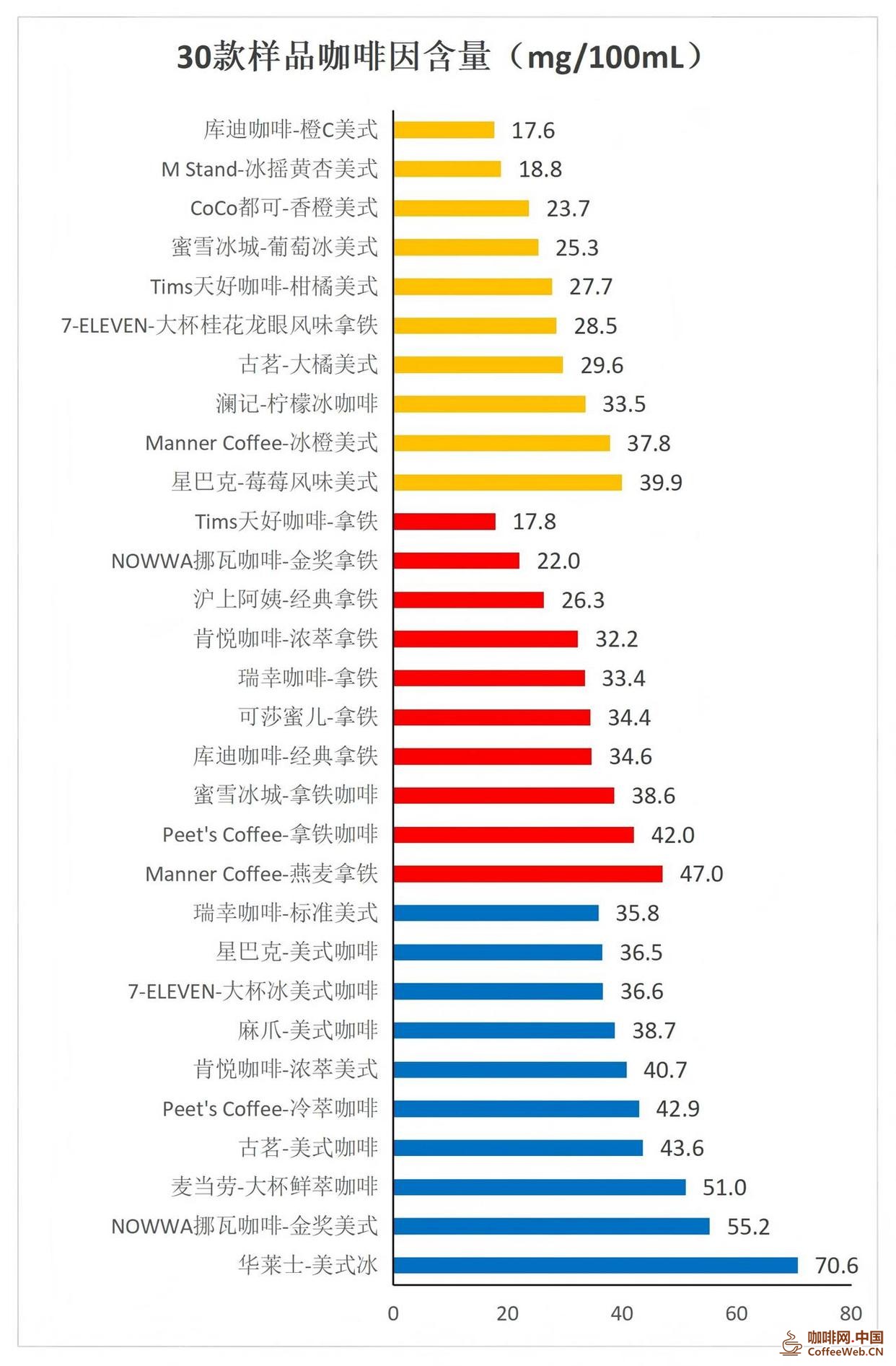
注:橙色柱状图代表果咖;红色柱状图代表奶咖;蓝色柱状图代表黑咖
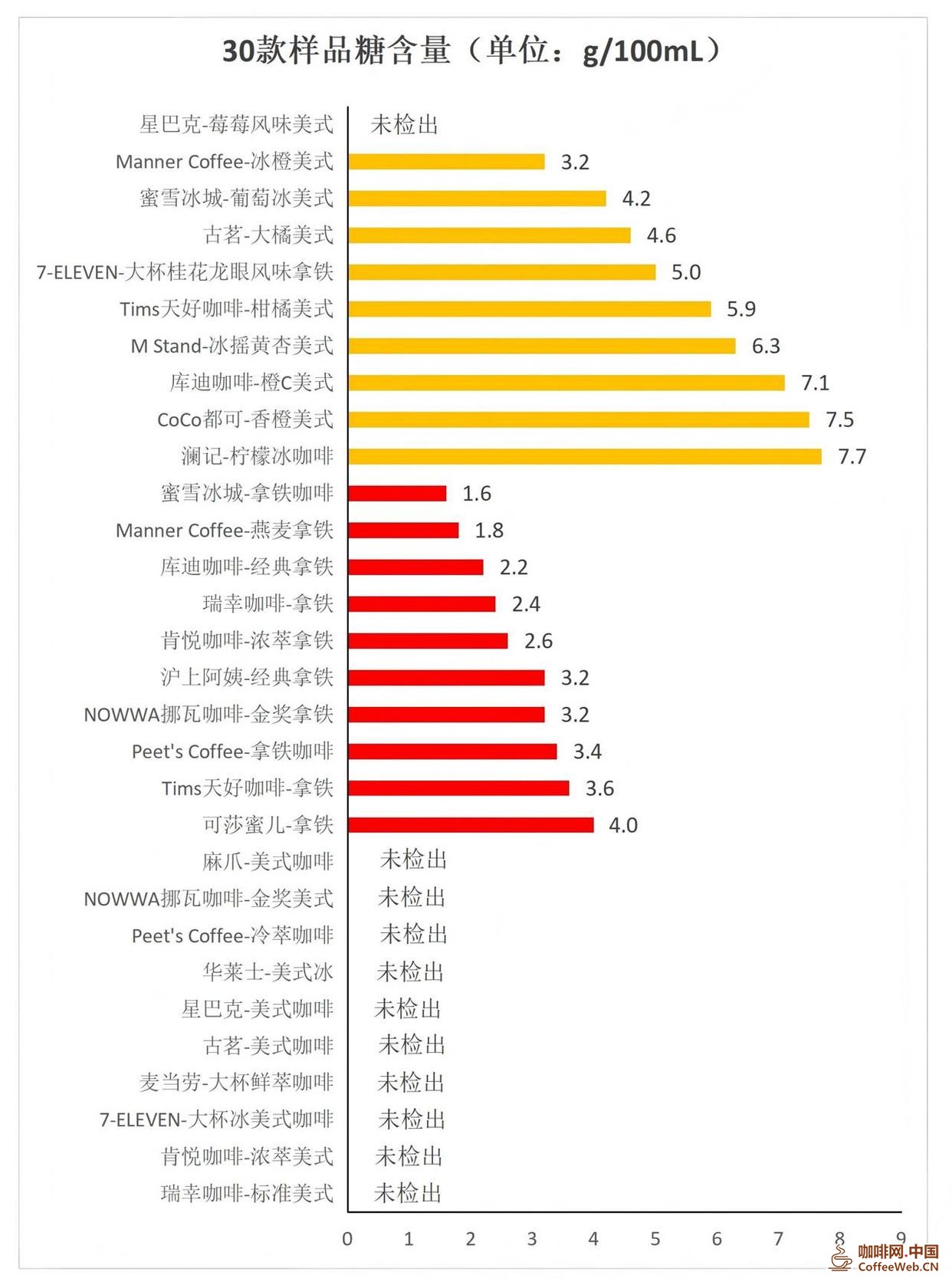
注:橙色柱状图代表果咖;红色柱状图代表奶咖请输入图片描述
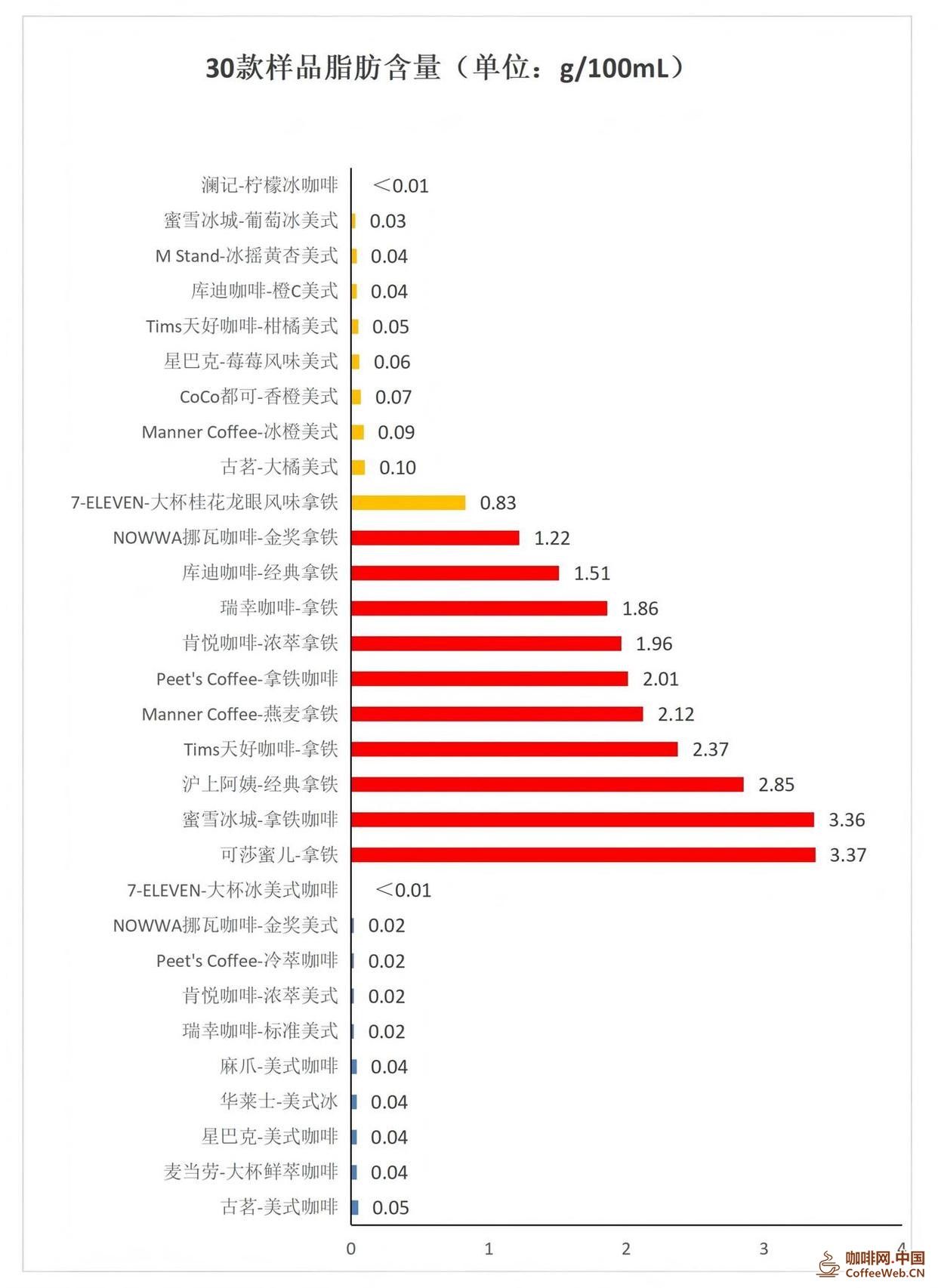
注:橙色柱状图代表果咖;红色柱状图代表奶咖;蓝色柱状图代表黑咖
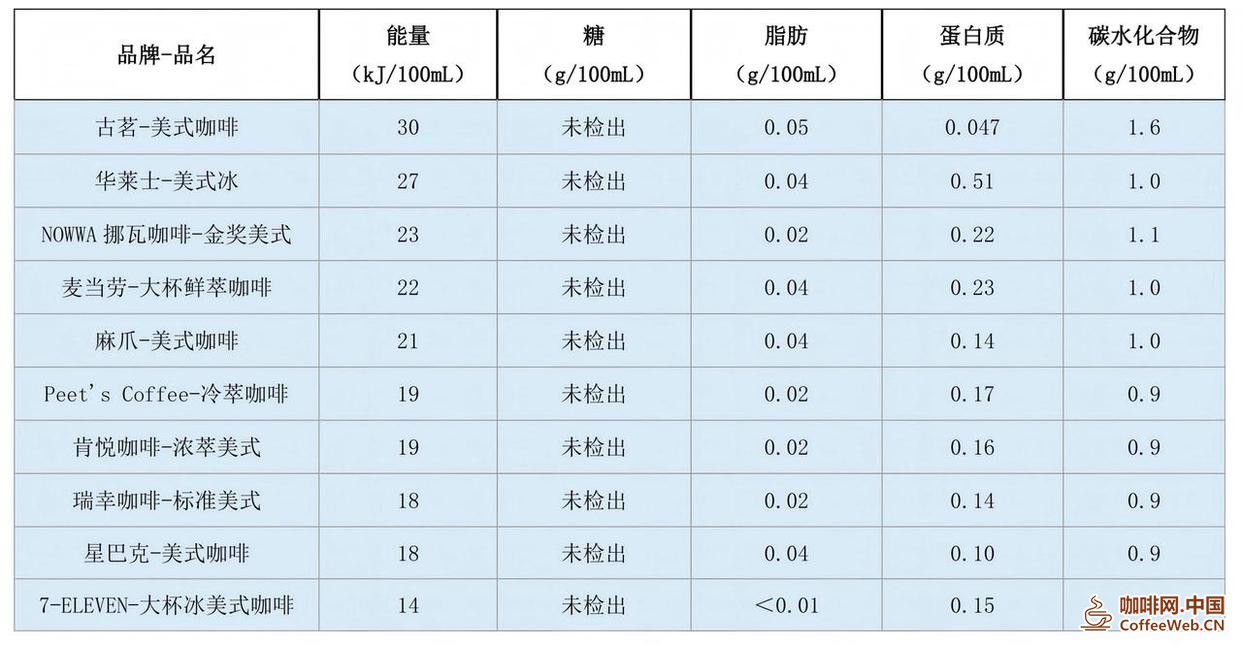
表1 10款黑咖样品能量检测结果
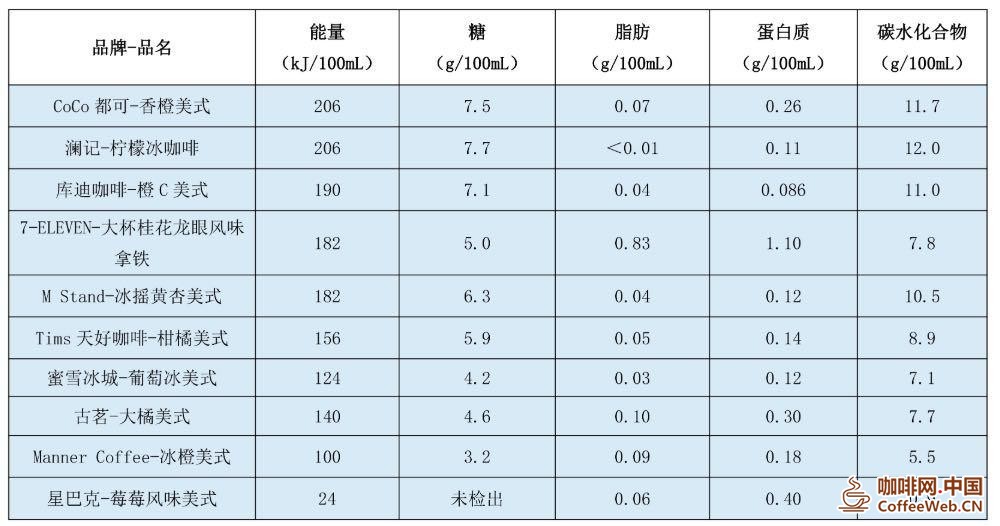
表2 10款果咖样品能量检测结果
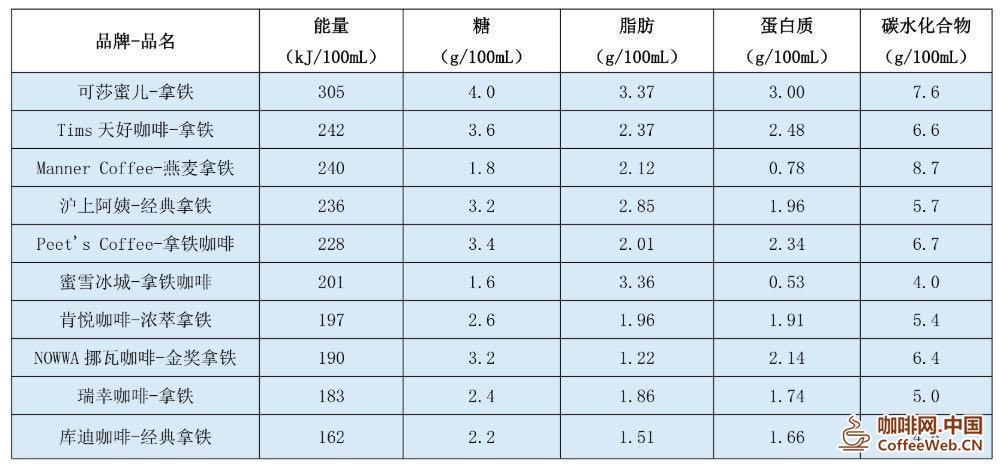
表3 10款奶咖样品能量检测结果
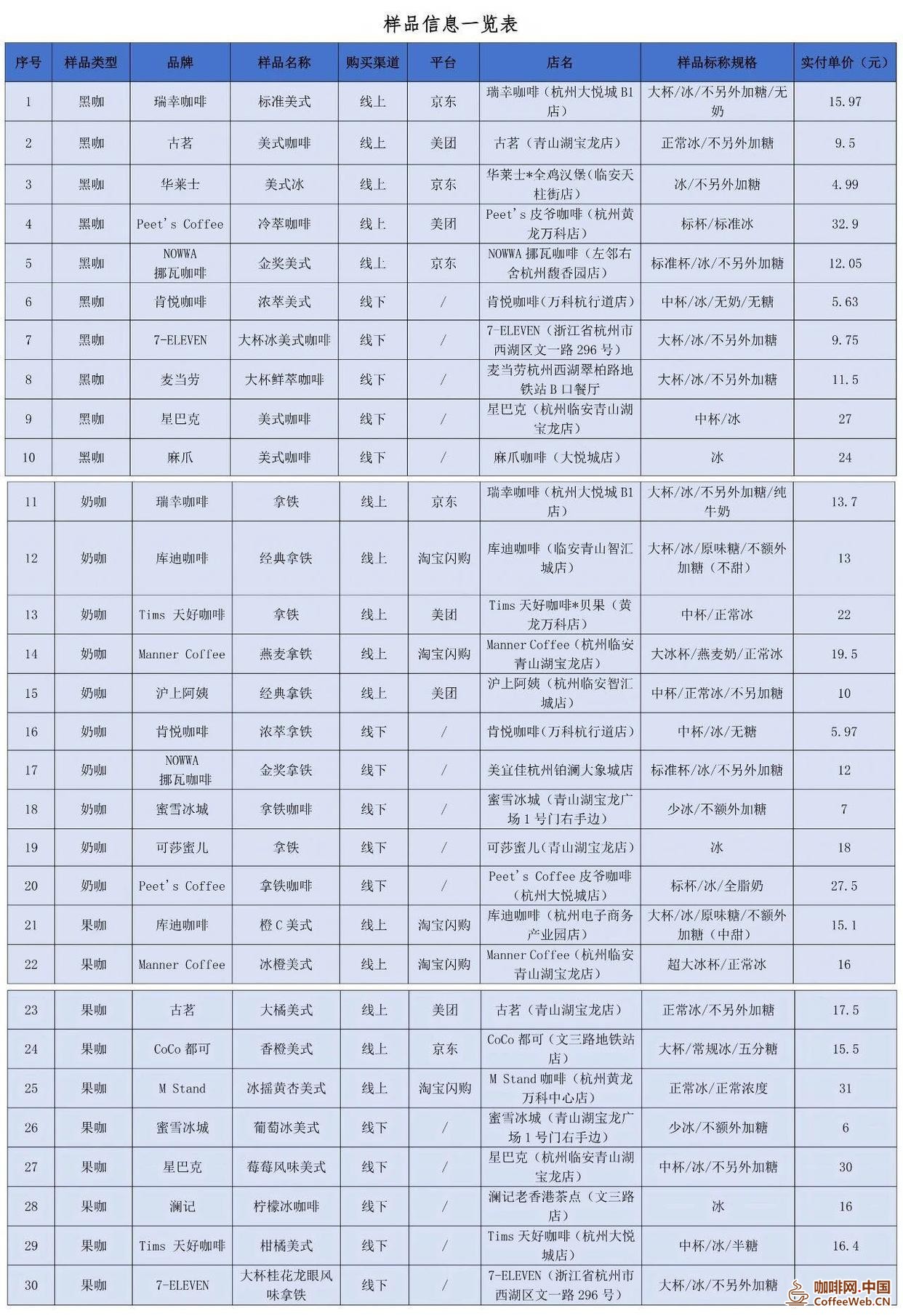
补充:本次样品采集于杭州地区23家实体门店的30款现制咖啡,涵盖黑咖、奶咖、果咖三大主流品类,实际支付价格4.99元至32.9元/杯。为确保客观性,所有样品均统一选择冷饮规格,并在可选范围内优先选取“不另外加糖”或最低糖度选项。具体样品信息详见《样品信息一览表》。 注:本次比较试验结果仅对检测的样品负责,不代表同品牌不同门店、不同批次产品的质量状况。
“转载请注明出处”
Reporter Ma Yan and Correspondent Ren Qianying from the Tide News client
A cup of awakening in the morning and a cup of replenishing energy in the afternoon - coffee is no longer a delicate symbol in office buildings, but a daily routine on commuting, at desks, and in small shops on street corners. From "occasionally trying new things" to "daily necessities", the health indicators such as caffeine, sugar, and fat behind it have also begun to attract more and more consumers' attention.
In response to these concerns, the Zhejiang Provincial Consumer Protection Commission commissioned Zhejiang Fair Inspection Center Co., Ltd. to conduct comparative experiments on commercially available freshly brewed coffee. This experiment collected 30 samples in the Hangzhou area, covering 19 brands including Starbucks, Luckin Coffee, Kudi, and Guming. The results showed that there were significant differences in health indicators among different categories of coffee, and choosing the right category was more important than choosing the right brand.
Caffeine: Black coffee is the most refreshing, while fruit coffee and milk coffee are relatively mild
The comparative test results showed that the caffeine content of the 30 samples ranged from 171mg/kg to 702mg/kg, which was converted to a volume concentration of 17.6mg/100mL to 70.6mg/100mL (see Figure 1 for details). The overall distribution showed a stepwise pattern of "black coffee>milk coffee>fruit coffee". Black coffee has the highest concentration and is the first choice for refreshing; Milk coffee and fruit coffee have a relatively milder taste due to the addition of ingredients such as milk, fruit, and fruit syrup. Although there is currently no standard requirement for freshly brewed coffee, according to GB/T 30767-2014 "Coffee Beverages", there are three samples with caffeine content ≥ 200mg/kg lower than the reference value for coffee and espresso beverages.
The "Scientific Consensus on Coffee and Health (2024)" jointly released by the Institute of Nutrition and Health of the Chinese Center for Disease Control and Prevention and five other institutions suggests that the daily caffeine intake of healthy adults should not exceed 400mg. Compared with the results of this comparative experiment, the caffeine content in a single cup of 30 samples is within this limit range, calculated based on 350mL common standard cup or 450mL common large cup.
Figure 1: Caffeine content detection results of 30 samples
Note: The orange bar chart represents fruit coffee; The red bar chart represents milk coffee; The blue bar chart represents black coffee
Sugar content: No additional sugar added ≠ No sugar, beware of fruit coffee hiding sugar
Under the premise of prioritizing "no additional sugar" or the lowest available sugar content during sampling, the results of this comparative experiment showed that the sugar content (the sum of fructose, glucose, sucrose, maltose, and lactose) of the 10 black coffee samples was not detected; The sugar content of 10 milk coffee samples ranges from 1.6g/100mL to 4.0g/100mL. Except for oat latte, the sugar mainly comes from lactose in milk; In the fruit coffee samples, except for one Starbucks raspberry flavored Americano coffee with undetectable sugar content, the sugar content of the other nine samples reached 3.2g/100mL to 7.7g/100mL (see Figure 2 for details).
It should be noted that the "Chinese Dietary Guidelines for Residents (2022)" recommend that adults should not exceed a daily intake of 50g of added sugar, preferably controlled below 25g. According to the test results, if converted to a common standard cup of 350 mL, the average sugar content of a single cup of fruit coffee sample is 18.0g, with 2 types exceeding 25g and the highest reaching 27.0g. If converted to a common large cup of 450mL, the average sugar content of a single cup of fruit coffee sample increases to 23.2g, with 5 types exceeding 25g and the highest reaching 34.7g.
Figure 2 Sugar content detection results of 30 samples
Note: The orange bar chart represents fruit coffee; The red bar chart represents milk coffee. Please enter a picture description
Fat and energy: Milk coffee has relatively high energy, while fruit coffee has more energy from sugar
Except for one latte based fruit coffee sample, the fat content of the other 19 black coffee and fruit coffee samples is ≤ 0.1g/100mL, which is lower than the threshold value of "no or no fat" for pre packaged foods (≤ 0.5 g/100 mL); The average fat content of the milk coffee sample reached 2.26g/100mL due to the addition of milk and oat milk (see Figure 3 for details).
Figure 3 Fat content detection results of 30 samples
Note: The orange bar chart represents fruit coffee; The red bar chart represents milk coffee; The blue bar chart represents black coffee
In terms of energy, the overall performance of the three types of coffee samples is "black coffee<fruit coffee<milk coffee". The energy detection results of 10 black coffee samples range from 14kJ/100mL to 30kJ/100mL, 10 fruit coffee samples range from 24kJ/100mL to 206kJ/100mL, and 10 milk coffee samples range from 162kJ/100mL to 305kJ/100mL (see table below for details). Calculated at 350mL to 450mL per cup, the average energy value of a single cup of black coffee sample is approximately 18 kcal to 23 kcal, a single cup of fruit coffee sample is approximately 126 kcal to 162 kcal, and a single cup of milk coffee sample is approximately 183 kcal to 235 kcal.
Table 1 Energy detection results of 10 black coffee samples
Table 2 Energy detection results of 10 fruit coffee samples
Table 3 Energy detection results of 10 milk coffee samples
Consumer Tip: Drinking this way is healthier
Based on the results of this comparative experiment and related research, the following tips are hereby issued to consumers: 1. Control total intake: It is recommended that healthy adults limit their daily caffeine intake to less than 400mg, and it is safer to drink no more than 2 cups of coffee per day. 2. Beware of high sugar content in fruit coffee: Fruit coffee has a relatively high sugar content and should not be consumed excessively. Try to choose products that do not add extra sugar. Especially for people who are sensitive to blood sugar and need to control their weight, it is recommended to choose sugar free black coffee. 3. Timing of drinking: Caffeine has a certain central nervous system excitatory effect, and its impact on sleep varies greatly among individuals. For people who are sensitive to caffeine, it is recommended to avoid consuming coffee as much as possible after lunch. 4. Special populations should drink with caution: For certain special populations, such as children, adolescents, pregnant and lactating women, it is not recommended to drink coffee.
Addendum: This sample was collected from 30 freshly made coffee varieties in 23 physical stores in Hangzhou, covering three mainstream categories: black coffee, milk coffee, and fruit coffee. The actual payment price ranges from 4.99 yuan to 32.9 yuan per cup. To ensure objectivity, all samples are uniformly selected with cold drink specifications, and the option of "no additional sugar" or the lowest sugar content is given priority within the optional range. For specific sample information, please refer to the 'Sample Information List'. Note: The results of this comparative experiment are only responsible for the samples tested and do not represent the quality status of products from different stores or batches of the same brand.
Please indicate the source when reprinting
试一试:
AI大模型翻译